Avoiding the pain of plant death through the end-to-end design of Little Bee Gardening
OVERVIEW
More people than ever are getting into gardening, mainly Millennials and Gen Z, but they have killed more than 50% of the plants they buy.
Role
Solo UX/UI Designer
Timeline
March - May 2025 (12 weeks)
PROBLEM
Millennials and Gen Z are failing to keep their plants alive
Over 50% of houseplant owners have accidentally killed an average of five plants. This is not merely a lack of horticultural knowledge or effort but a failure of current design solutions to adequately support their decision-making.
SOLUTION
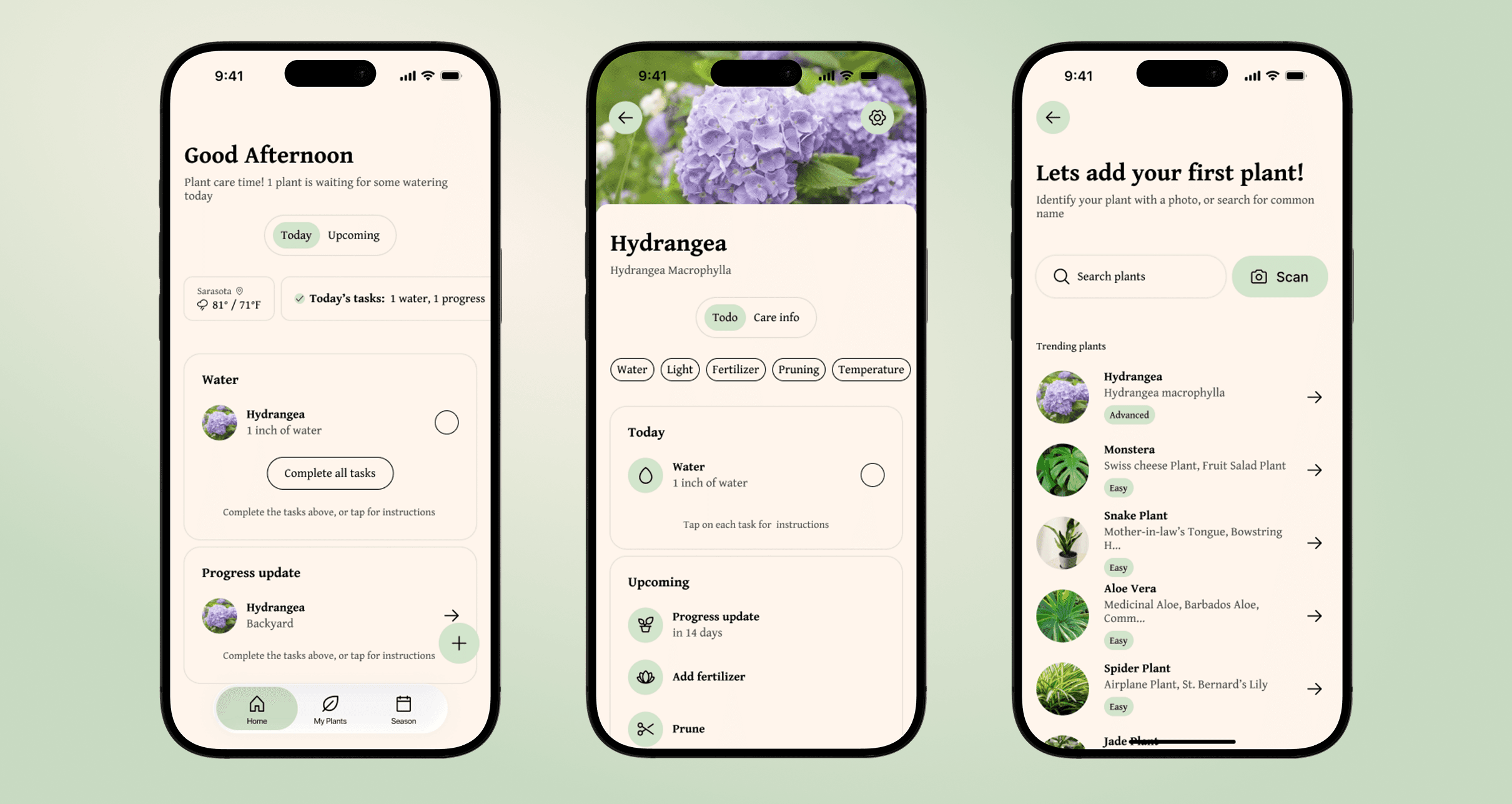
Proactive plant care is key
1
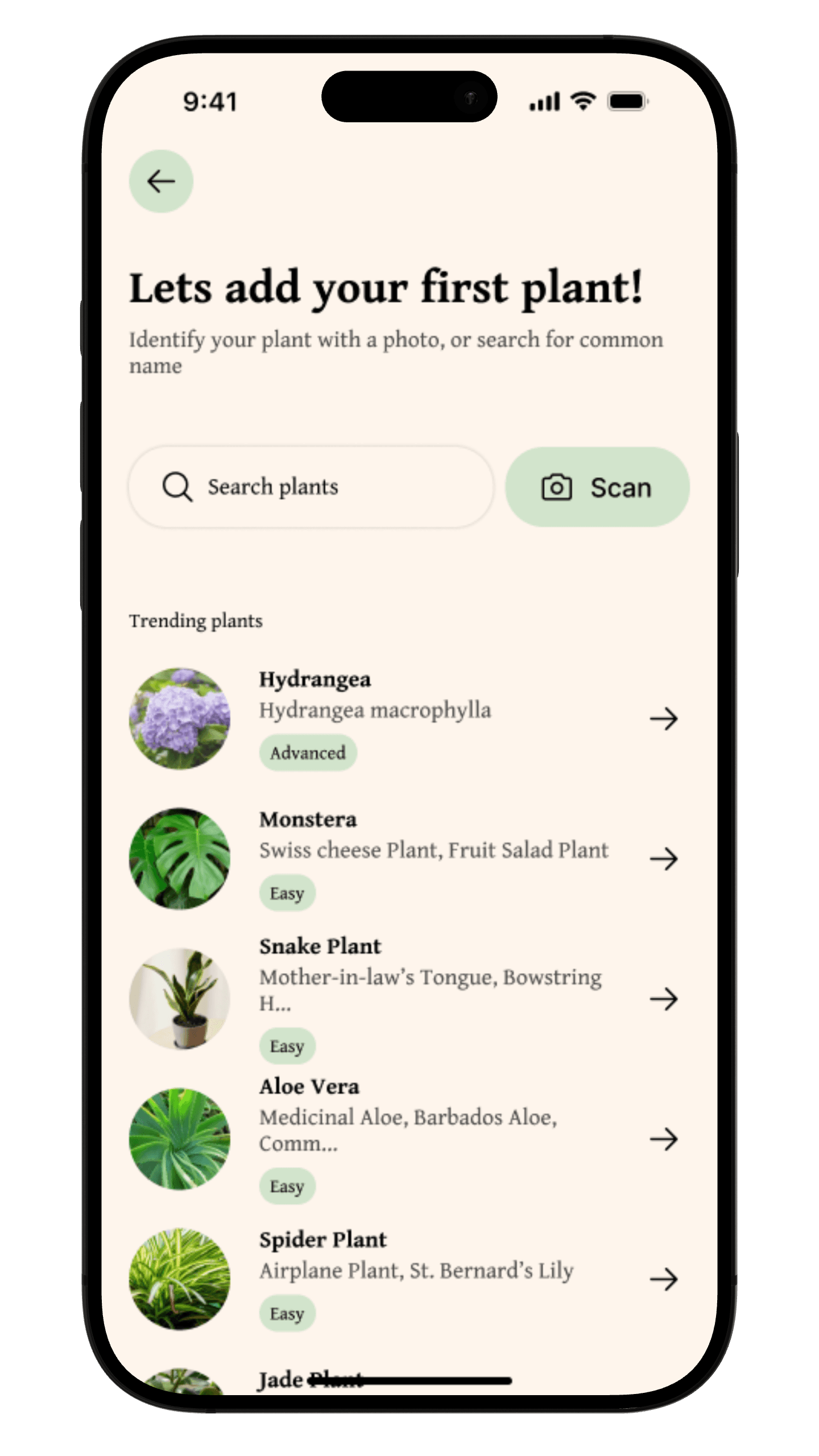
add a plant with ease
3
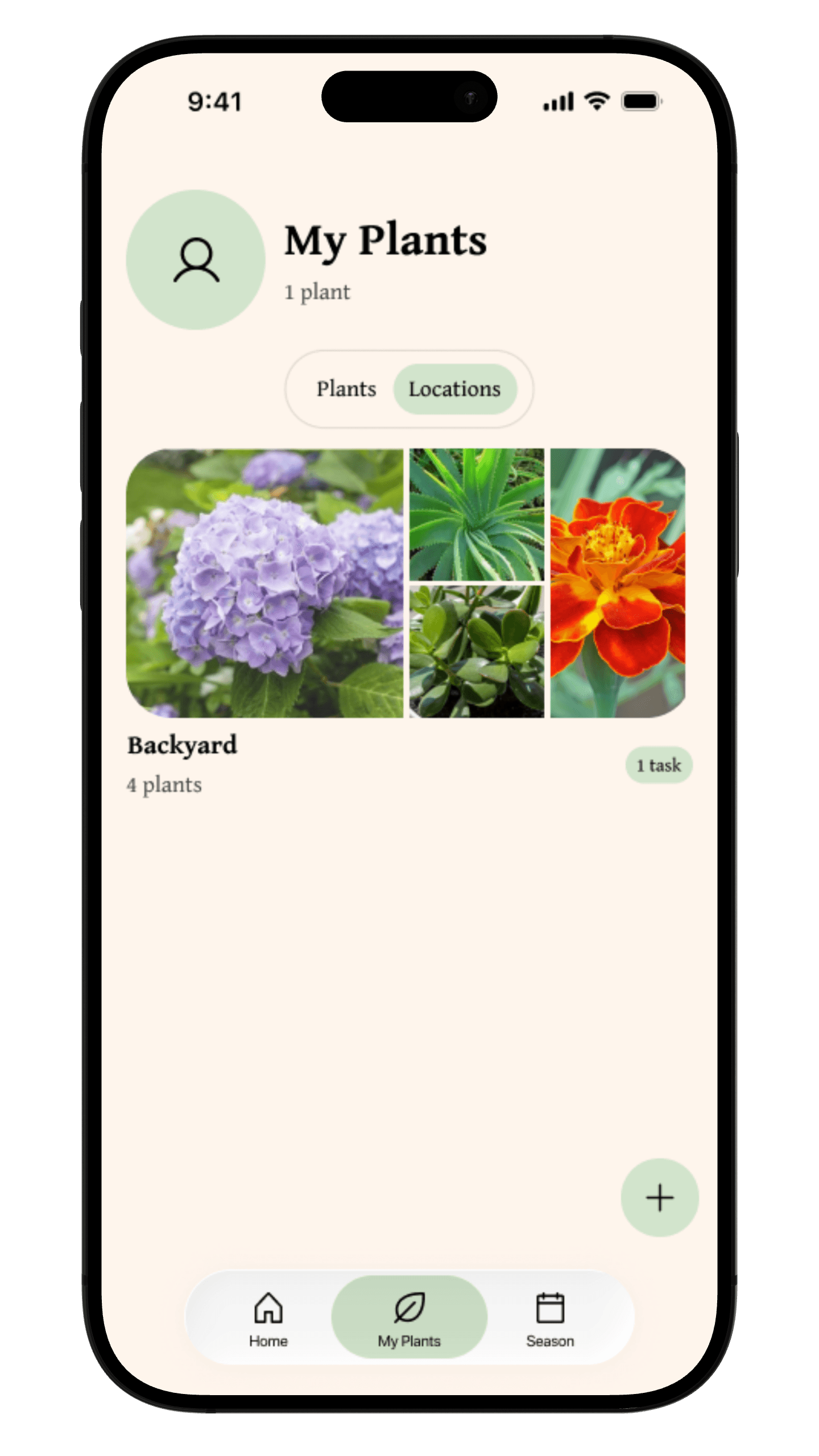
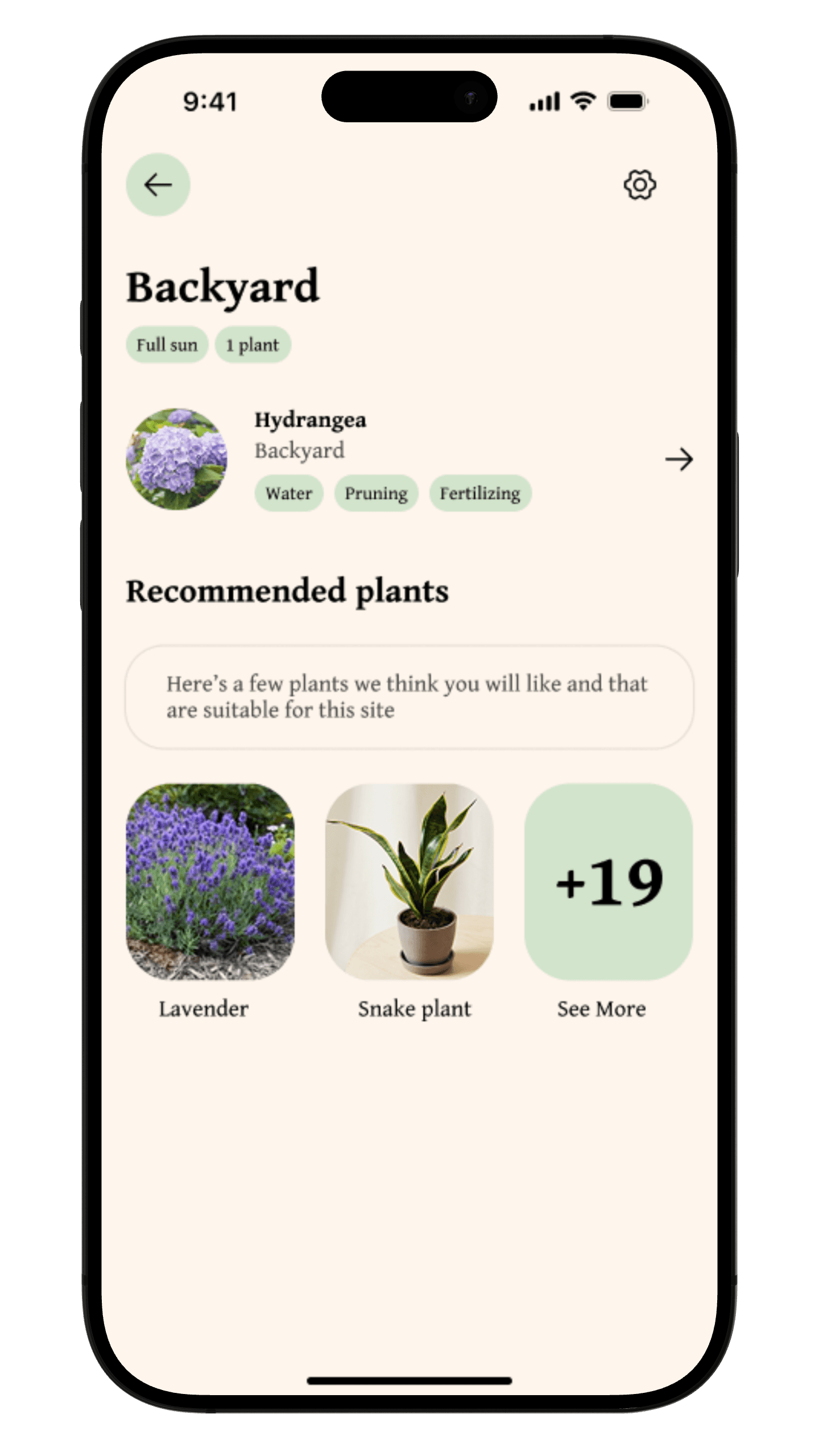
Location Specific Recommendations
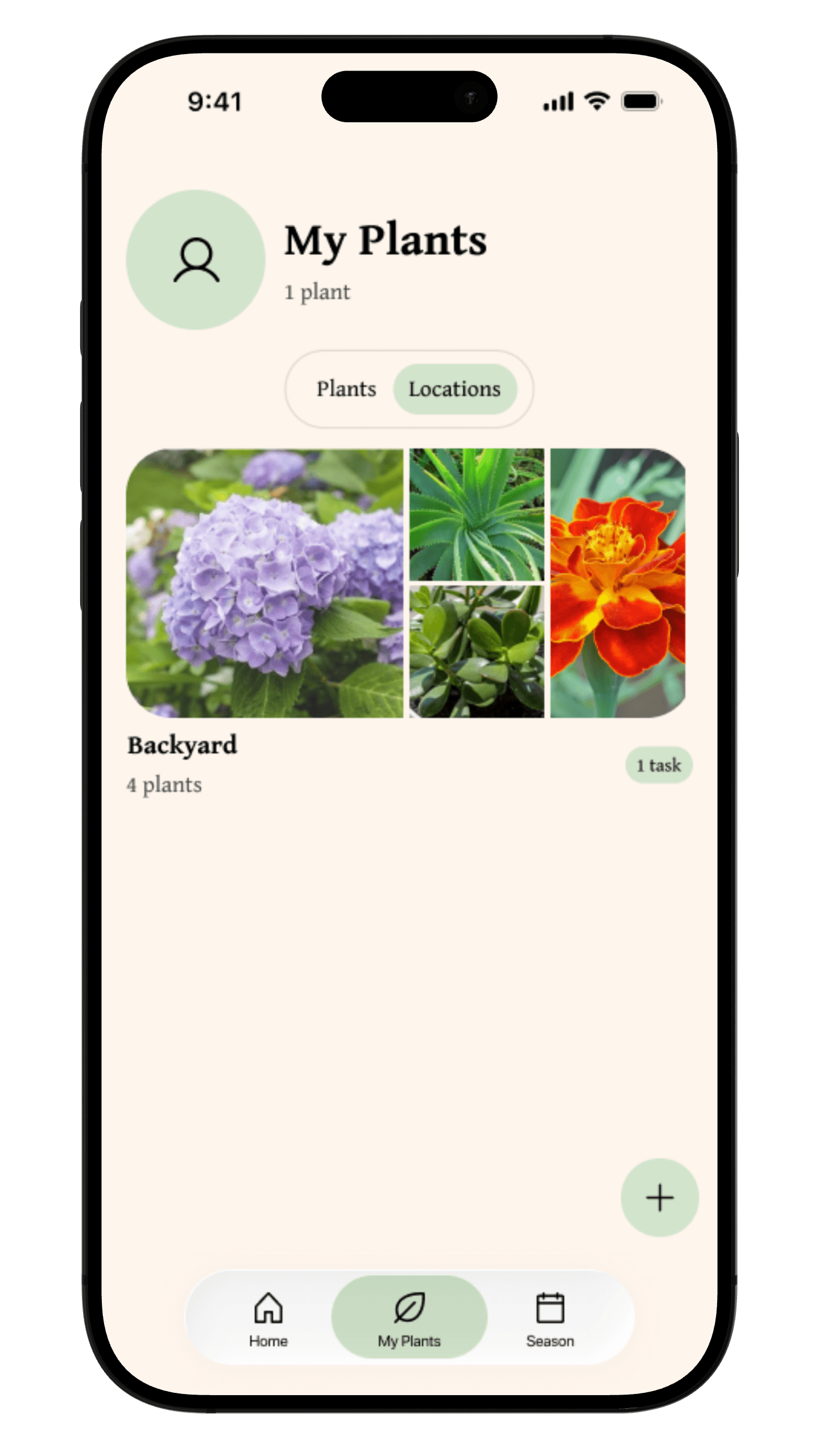
Plants categorized by specific, customizable locations
Recommendations for additional plants based on unique conditions
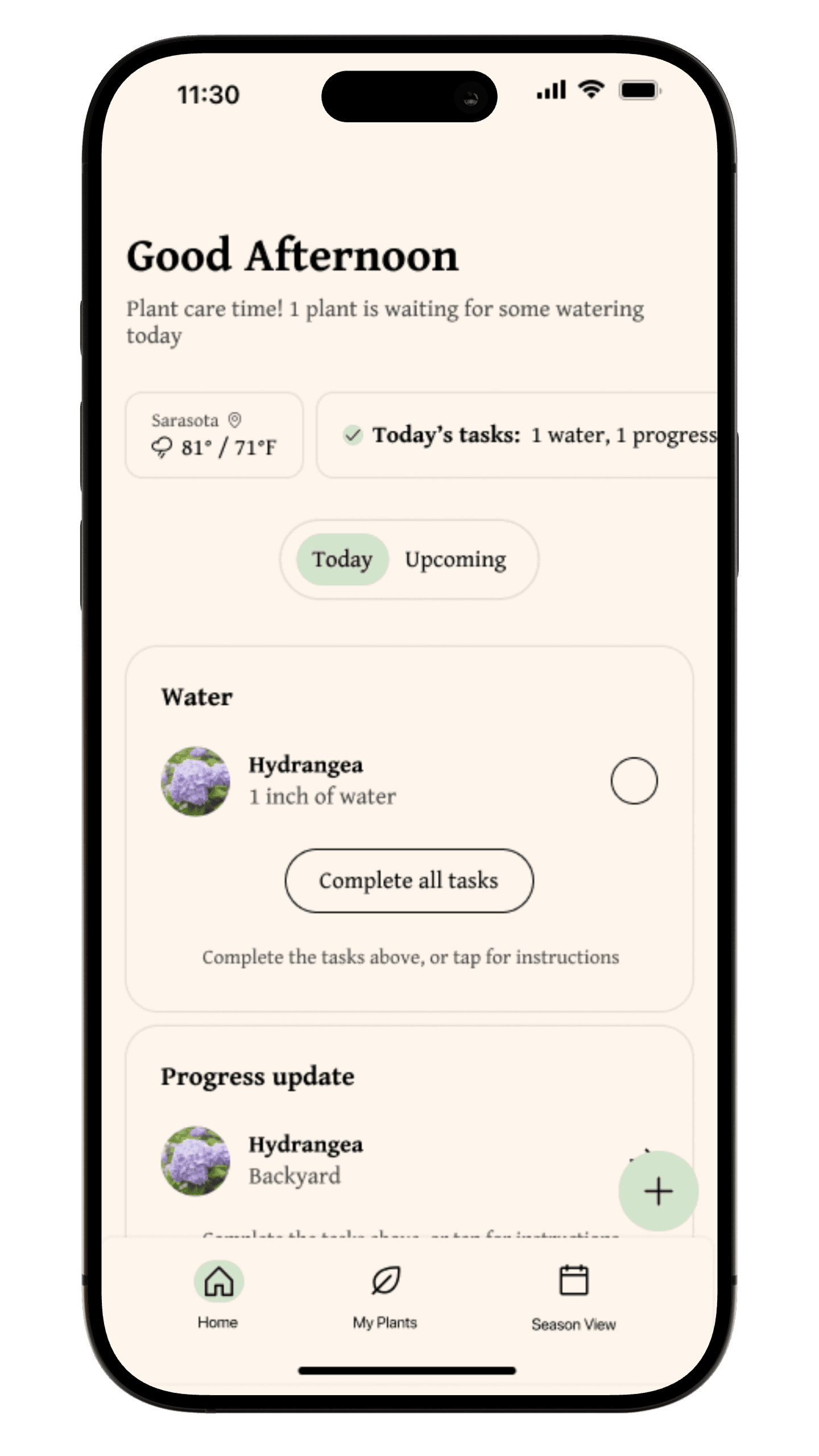
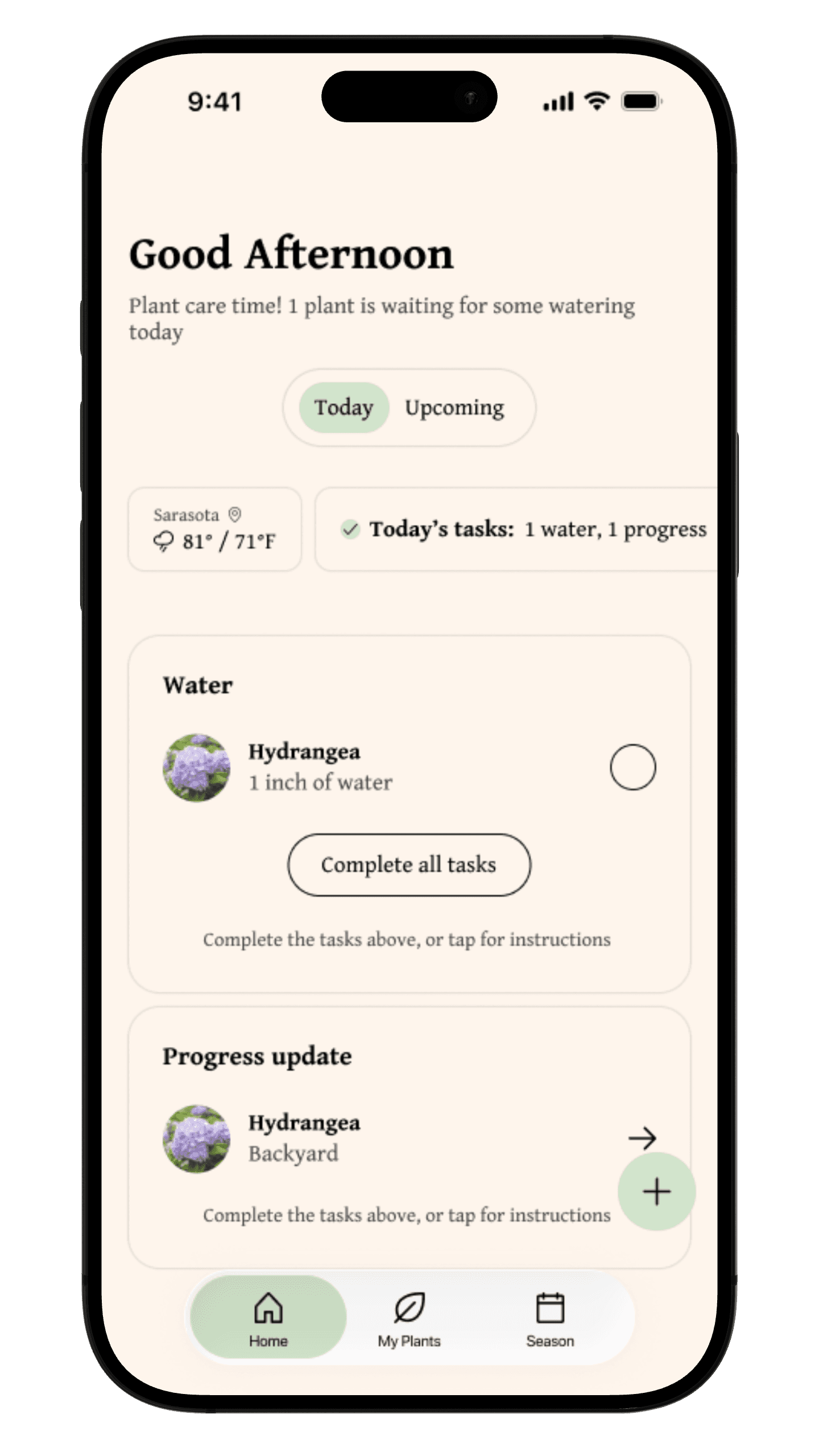
Dynamic care tasks synced to real-time local weather data
competitive analysis
Competitors provide encyclopedias, not care companions
Looking at four of the most well liked plant care apps on the market, I found that they are great at giving raw data and information but fail at providing intuitive, holistic support.

Planta

Greg

Blossom

Vera
user interviews
Gardeners across all experience levels face significant uncertainty and emotional frustration
I interviewed 5 novice and intermediate gardeners to try and gather qualitative insights about their plant care habits, challenges, tools, and emotional motivations.
Research questions:
How do you manage routines and use tools?
Where do you encounter the most confusion?
How does plant failure affect your confidence and motivation?
How does space and seasons influence your decisions?
What guidance empowers you to feel successful?
The main insight
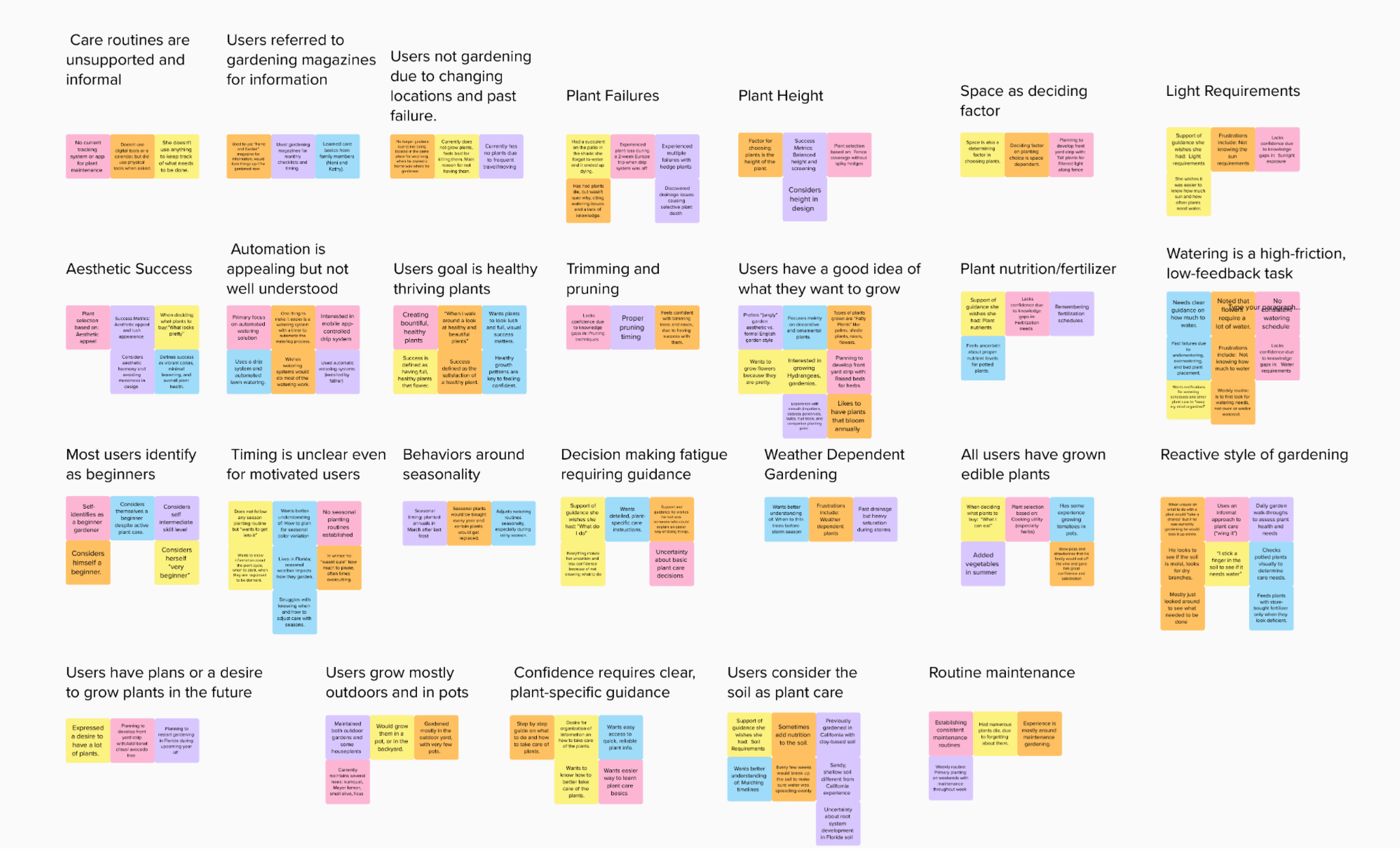
Gardeners fail because they rely on reactive intuition rather than a structured and proactive organization
Based on the trends in my affinity map, I've noticed how if there is no structure or real plan to follow, users will “wing it” until a plant dies and give up on the hobby.
Uncertainty
Users struggle with specific water, sun, and nutrient needs.
Confusion regarding seasonal changes leads to improper pruning
Knowledge gaps cause beginners to “take a chance” blindly.
Inconsistency
Maintenance is reactive and based on visual cues only.
Lack of tracking tools leads to forgetting critical tasks
Travel and lifestyle changes frequently disrupt plant care routines.
Discouragement
Frequent plant death triggers significant guilt or frustration.
Emotional burnout causes users to quit gardening entirely.
Success relies on vibrant growth and edible harvest satisfaction.
the novice gardener persona

32 Years Old | Freelance Copywriter
User Story
Hi! I'm Amanda. I love spending time on my small patio and yard, but as a novice gardener I always feel like I'm just guessing. Between the contradictory advice online and the guilt of past plant failures, the hobby can feel pretty overwhelming. I’m not looking for perfection, I just want to enjoy my garden.
Goals
Grow beautiful flowering plants
Learning about light, soil, and water
Sustained success and confidence
Motivations
A beautiful thriving garden
Less cognitive load from overwhelming information
The practical benefit of having fresh home-grown herbs
Pain Points
Information is contradictory and overwhelming
Knowing how much or how little care to give
Varying care requirements for different plant types
Discouraged from previous plant failure
Testing + improvements
Three major improvements in my design
After two rounds of testing, with ten total participants I continually iterated my design over the span of 4 weeks - with 3 major improvements:
1
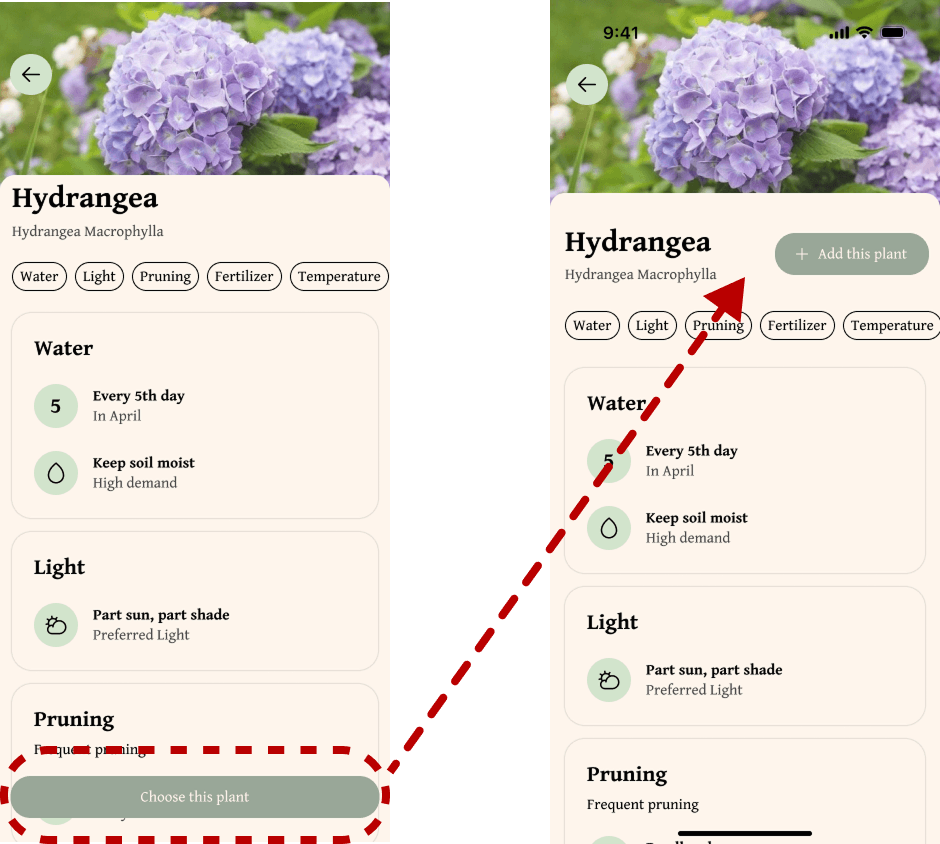
CTA visibility
Based on user testing 80% of users hesitated on the plant details screen, unsure of how to proceed
Moving the CTA near the header solved this issue
Simplified navigation
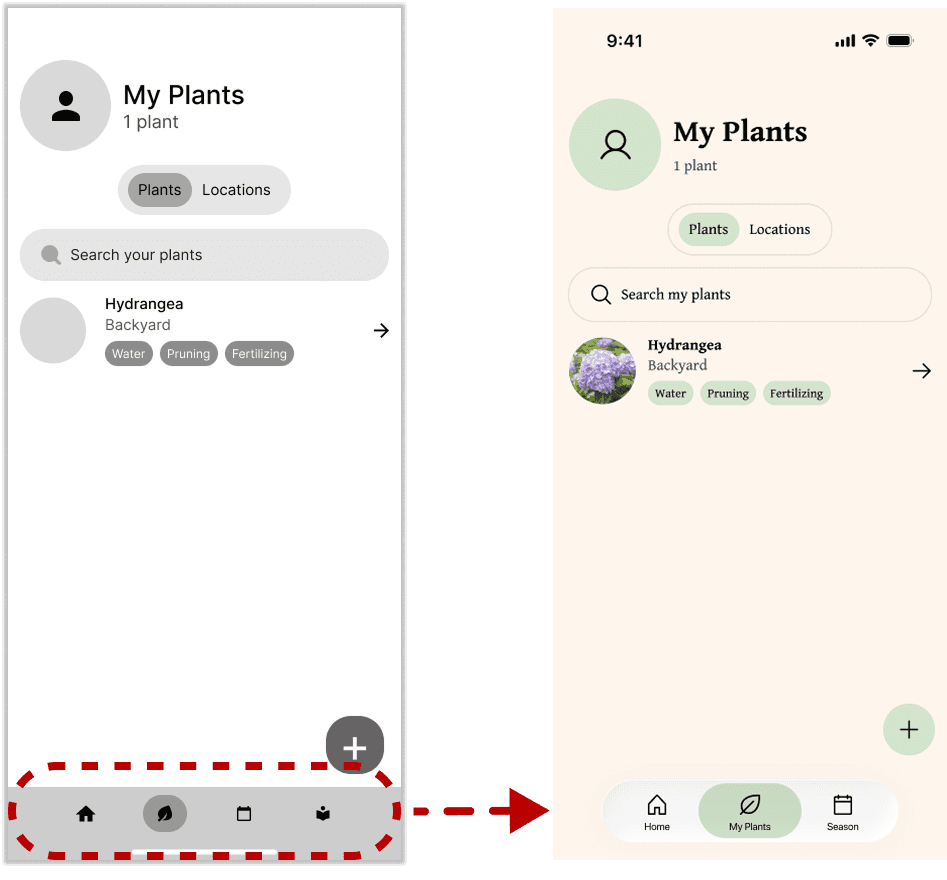
Testing revealed that navigation to the saved plant section caused confusion
Streamlined the navigation and added labels for clarity
3
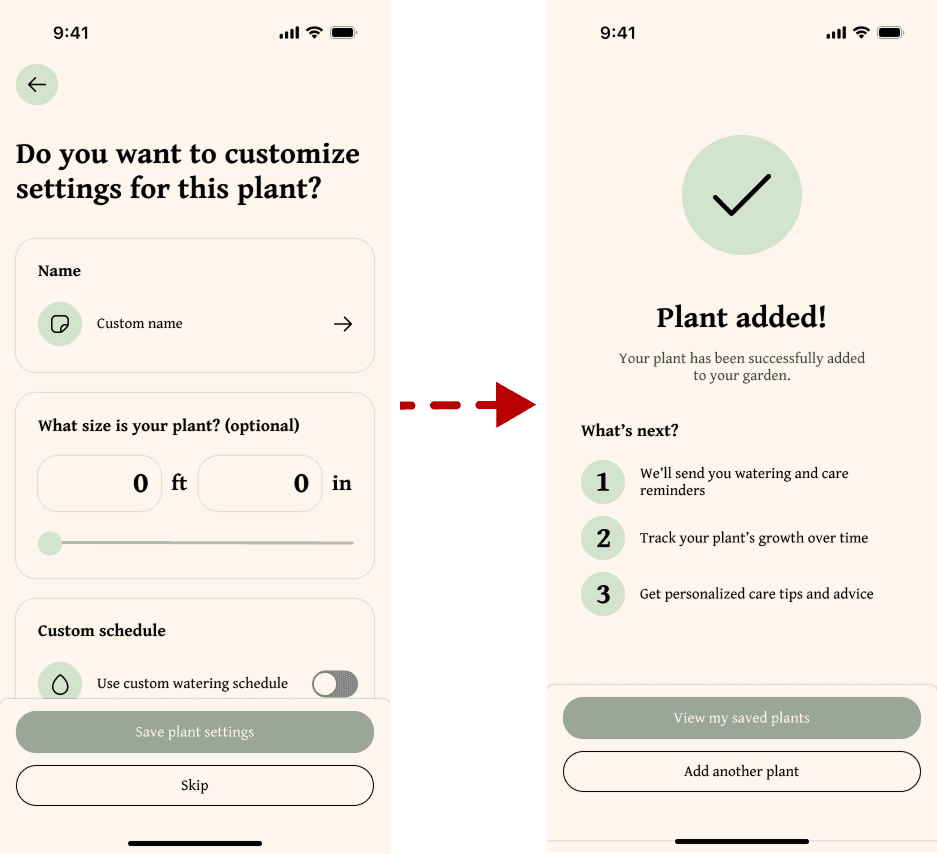
Post action confirmation
80% of users during testing were unsure if they successfully added a plant
I added a confirmation screen to bring clarity and direction.
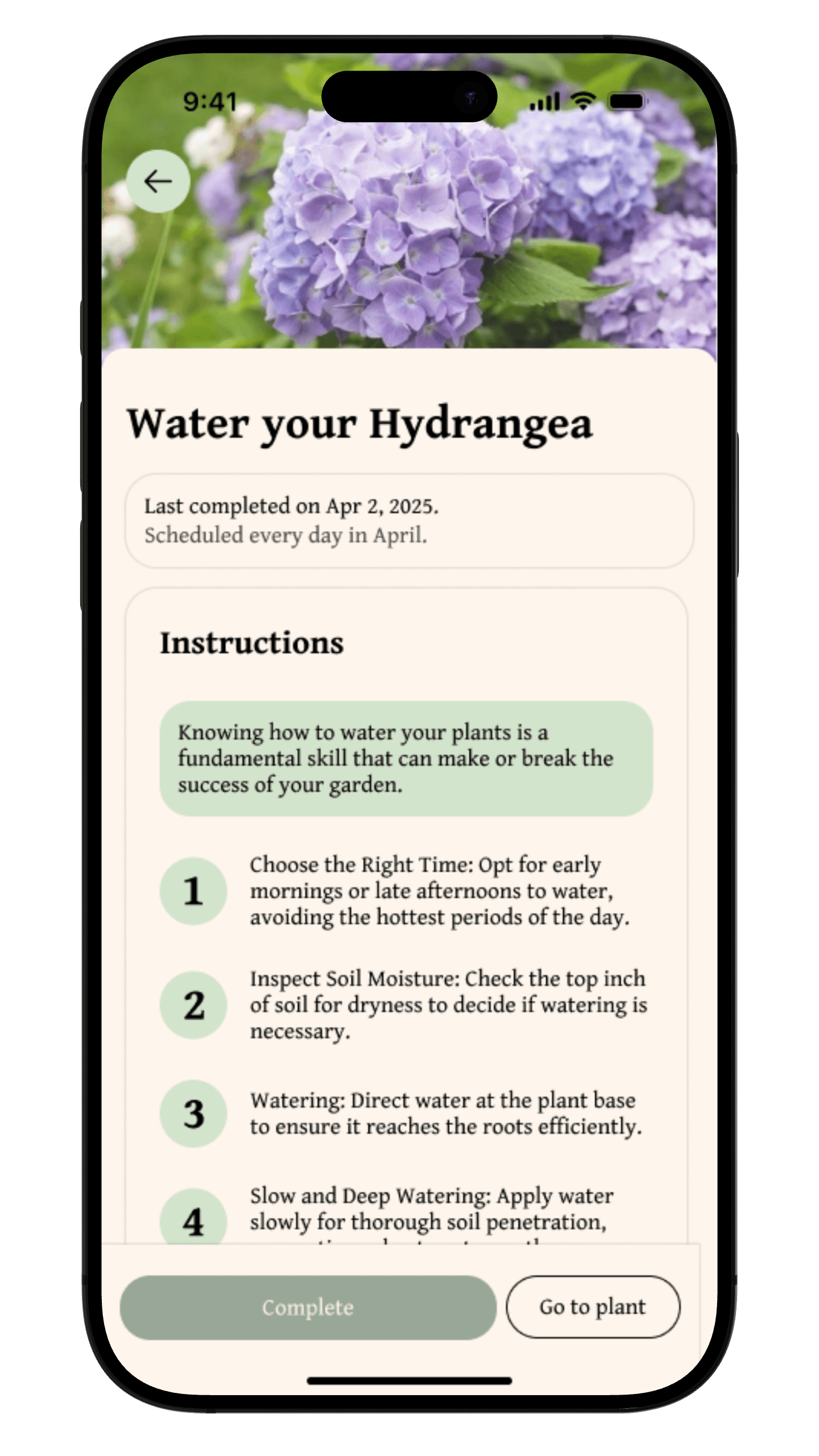
The final screens
The final product
conclusion + lessons learned
What I’d do differently next time
Keep the scope focused on what is the most important. Generating a ton of ideas up front left me with a wide scope of features, which can potentially be great for future iterations, but for an MVP product doing the simple features well is more important.
Data backed decisions over intuition. At first I came up with solutions that I intuitively felt would solve the users problems found in user research. After the first round of testing and finding all of users confused about saving a plant, I stubbornly only changed minimal UI elements before testing again. After the second round of testing and having the exact same issue, I relented and changed the button location, alleviating the issue finally.
Be insight- not process driven. Despite weeks of research and development, my first version of this case study was full of unnecessary detail instead of tying everything into the bigger picture. Hence I cut down the copy for more that 60% and focused on the major points of the project.
© 2026 Vincenzo Stornaiuolo. All Rights Reserved.